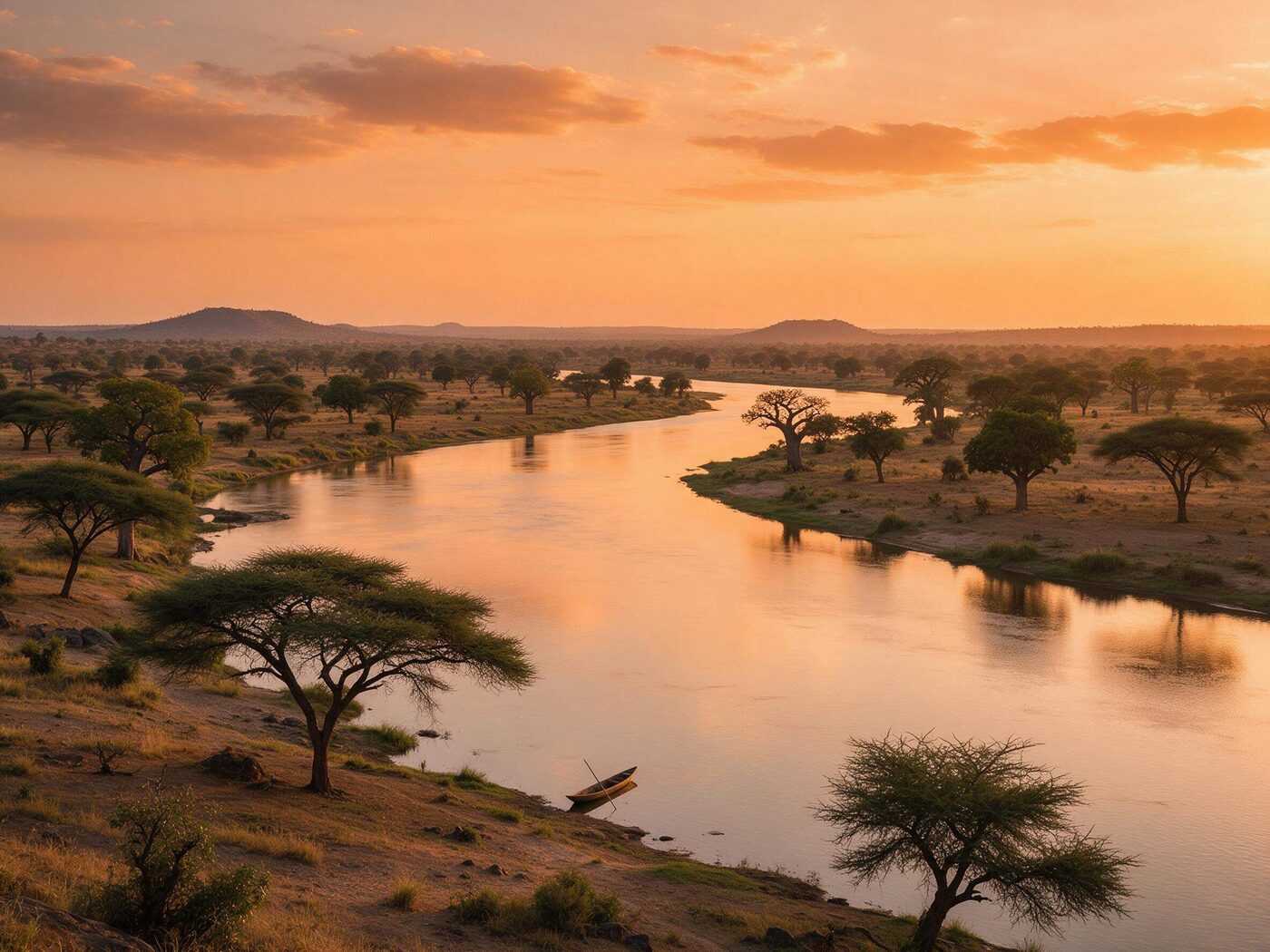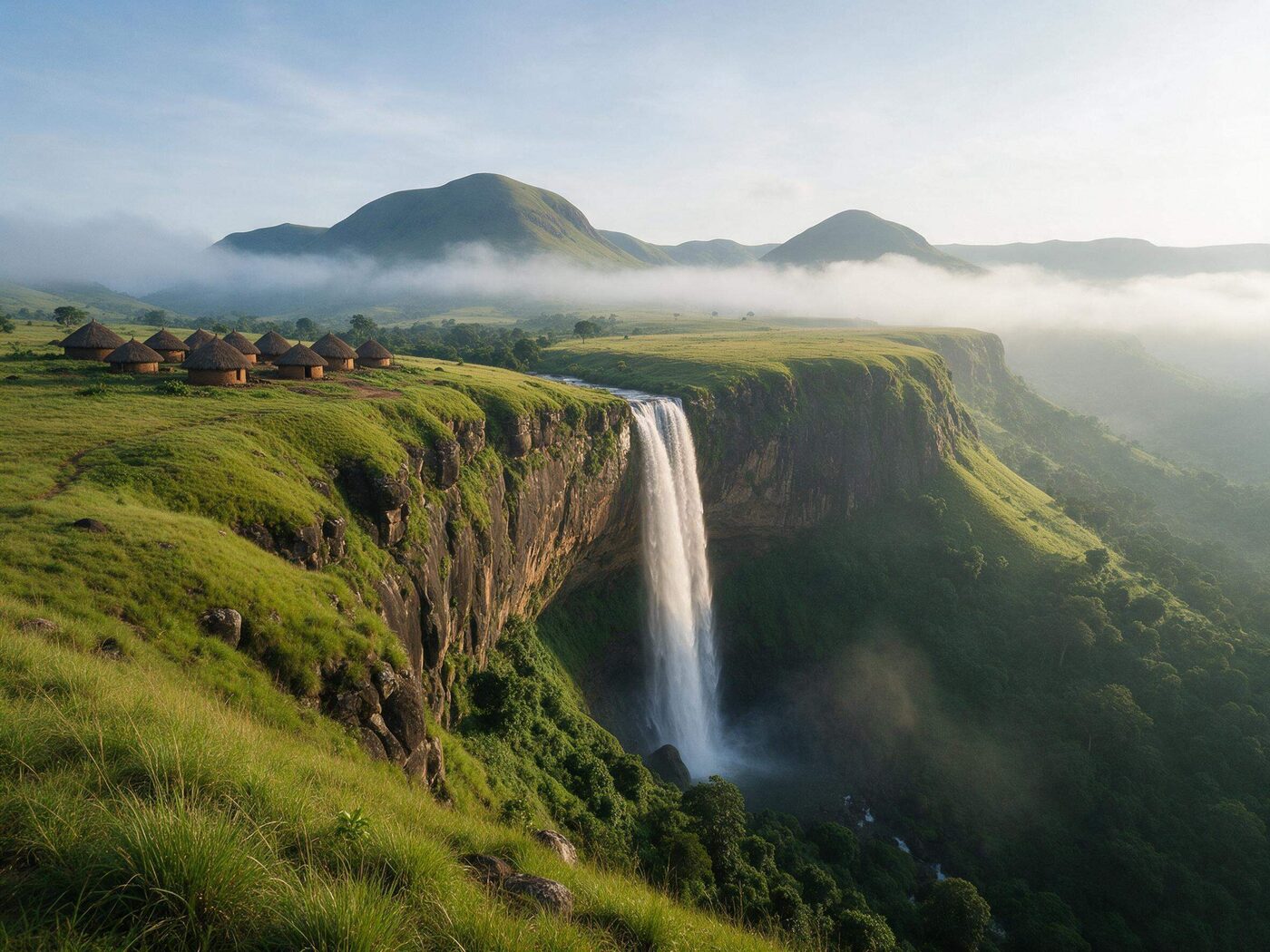
Upper Guinea is a land of savannah, rivers and memory. Kankan, the former capital of the Malinké kingdom, opens the road to the Niger and to villages where Manding culture is still passed on every day.
A different Guinea, drier and wider
Leaving the Fouta to the east, the vegetation thins, baobabs appear and villages spread out. Kankan lives to the rhythm of the Milo, a tributary of the Niger. The region is a cradle of Malinké culture, with its griots, ballets and weaving.
Highlights
The Niger and the Milo
The Niger rises further west, in the Faranah region, then crosses Upper Guinea. At Kankan, the Milo joins the river. The banks are a place of life: laundry, fishermen, pirogues and herds. A walk at sunset is essential.
Kankan’s grand market
A regional market with locally woven fabric, indigo dyes and farm produce. It is also a place of exchange between communities, with an atmosphere very different from Conakry.
Ballets and Manding music
The region is known for its percussionists and ballets. Depending on the period, we can attend a rehearsal or a performance. We favour respectful encounters, with direct payment to the artists.
Siguiri and gold panning
Near the Malian border, Siguiri is an area of traditional gold panning. Visits are made carefully and with local guidance: this is a workplace, not an attraction. We do not encourage buying gold on site without a legal framework.
Faranah and the sources of the Niger
West of Kankan, Faranah is associated with the sources of the Niger and the history of the region. The landscape of hills and savannah offers beautiful pauses on the road.
Suggested itinerary — 4 days
- D1
Conakry → Kankan
Domestic flight or long road via Faranah, check-in and a walk along the Milo.
- D2
Cultural Kankan
Market, weaving workshops, a meeting with a percussion group and a visit to the historic town.
- D3
Siguiri or Faranah
Day trip depending on the season and road conditions.
- D4
Return
Last market visit, then flight or road back to Conakry.
Practical information
- Heat: the region is very hot in April and May. Bring water, a hat and light clothes.
- Transport: the domestic flight significantly reduces travel time, but schedules vary.
- Roads: long distances need preparation: breaks, water, food and a power bank.
- Photography: ask people first and avoid gold-panning sites without a guide.
Religious holidays and harvests change market activity. We check the most interesting days before setting the programme.