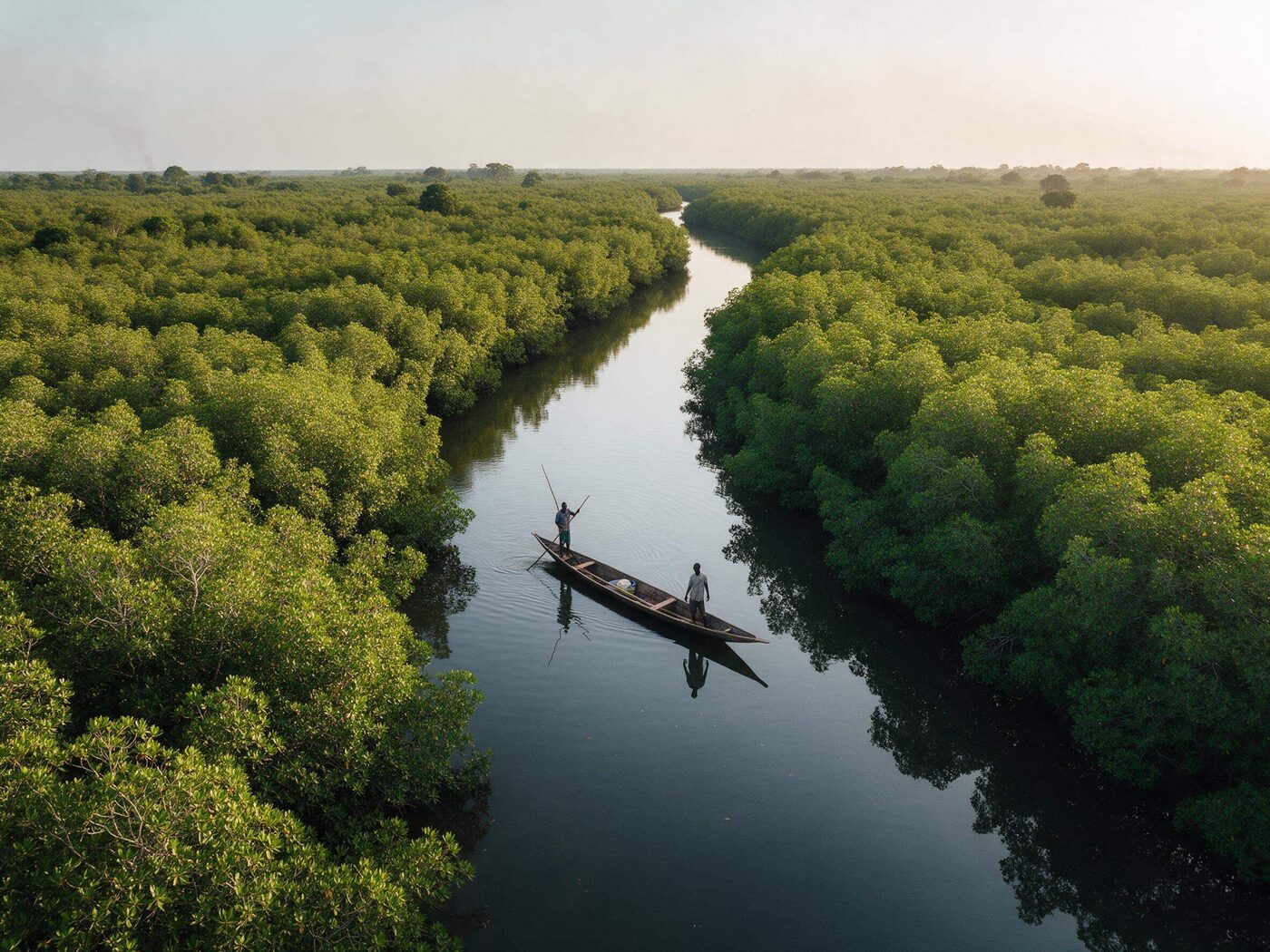
In north-west Guinea, the Rio Nunez draws a maze of mangroves, islands and fishing villages. This is a quieter Guinea, far from the classic circuits, where you travel to the rhythm of the tide.
A delta to explore
The Rio Nunez rises in the Fouta-Djalon and reaches the Atlantic after a long delta. Boké, the regional capital, was already a trading post in the nineteenth century. Today the town remains a starting point for the Tristao islands and the mangrove villages.
Highlights
Navigating the mangroves
By pirogue you pass mangrove roots, sandbanks and villages reachable only by water. Fishermen set bamboo traps, women gather oysters. The silence is striking, broken only by birds.
The Tristao islands
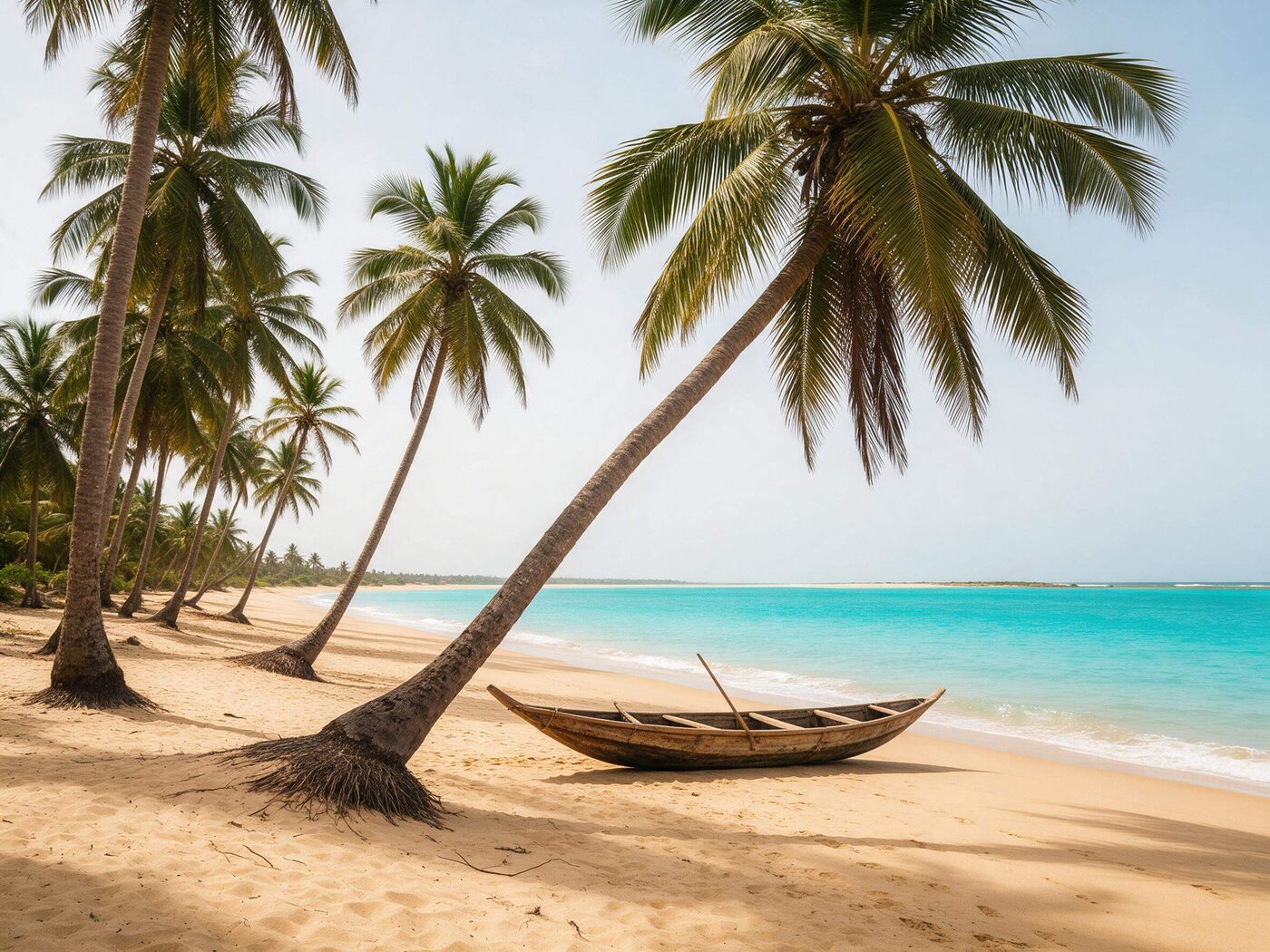
A string of islands between Guinea and Guinea-Bissau, with wild beaches and a population living from fishing and rice growing. Access depends on the tide and the condition of the boats: we always plan a fallback.
Historic Boké
A few old buildings recall the trading-post era, particularly around the port and former trading houses. A short visit, best completed by the market and a meeting with local artisans.
Kamsar and the coast
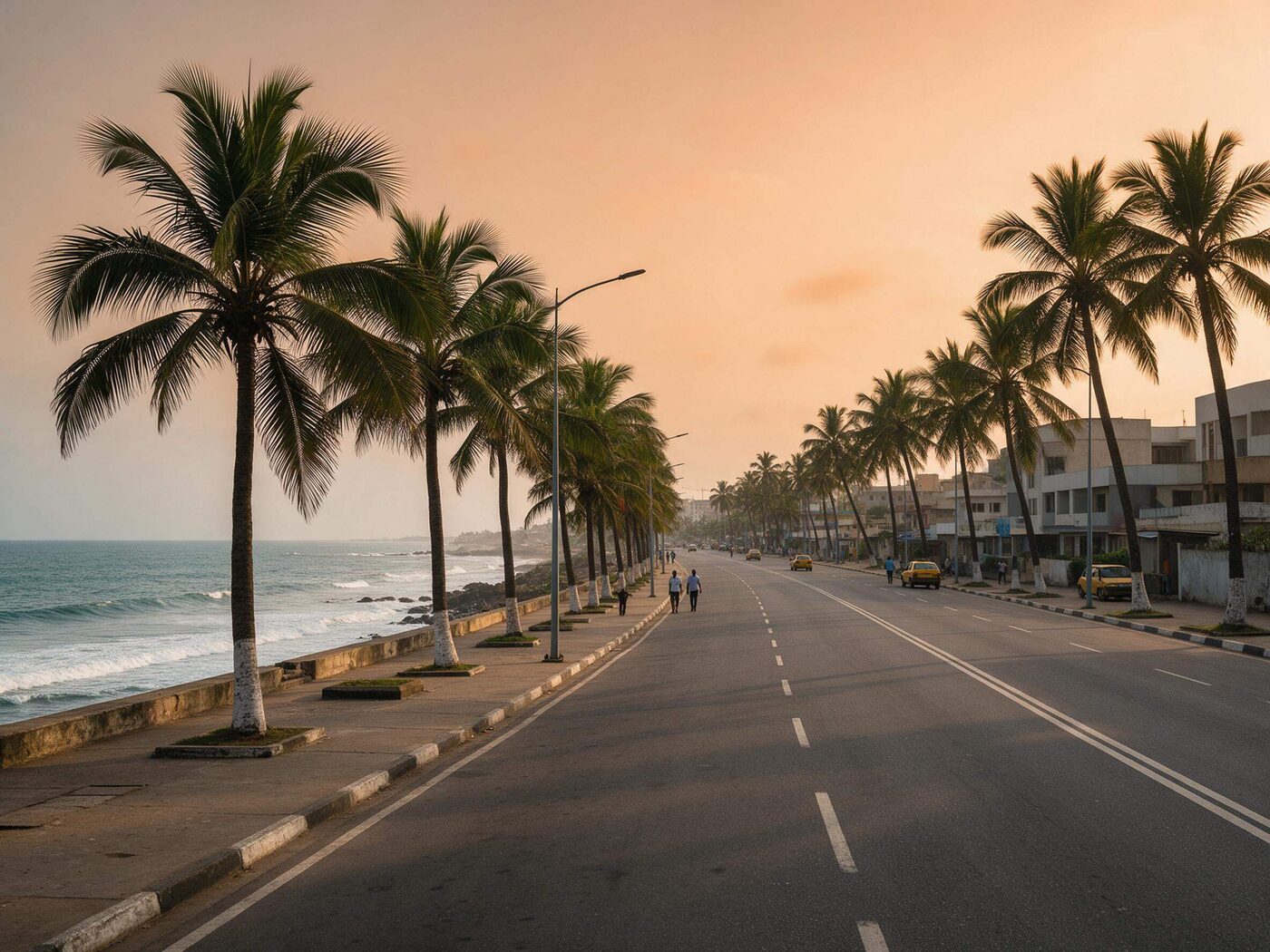
Kamsar is a port city linked to bauxite mining. The contrast between industry and fishing villages is striking. We do not treat it as a tourist stop in itself, but as a waypoint on the coast.
Suggested itinerary — 3 days
- D1
Conakry → Boké
Road to the north-west, check-in and a first look at the town at the end of the day.
- D2
Rio Nunez by pirogue
A day on the water through the mangroves, lunch with local hosts, return at sunset.
- D3
Tristao islands or return
Outing to the islands depending on the tide, then back to Conakry or on to the Fouta.
Practical information
- Tides: navigation times change every day. The programme is adjusted the day before.
- Boats: motorised pirogues with life jackets. Bring sun protection and a windproof layer.
- Accommodation: simple options in Boké; choice is limited on the islands.
- Health: malaria area, protection essential.
- Respect: villages are not sets: ask before taking photographs.
The delta is a fragile environment. We work with local guides and keep groups small to reduce our impact.